
Battery Storage
- Home /
- Services
What Is Battery Storage?
Battery storage systems are designed to store excess electricity, often generated from solar panels, for later use. This helps both residential and commercial energy users reduce their dependence on the grid, keep essential devices powered during outages, and make use of energy when it’s most beneficial.
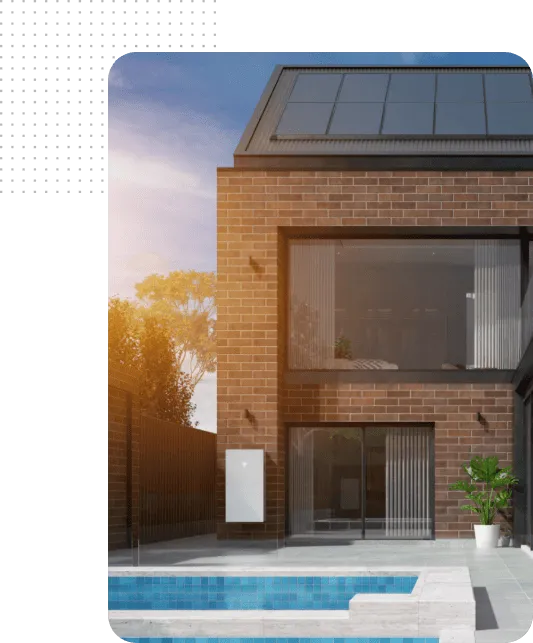
With home battery storage systems, homeowners can store energy produced by solar panels and use it at night or during a power failure. These systems are increasingly important in today’s energy landscape, especially for solar users who want to maximize their return on investment and improve their energy independence.

Types of Battery Storage Systems
Battery Storage Comparison
Tesla powerwal

An all-in-one, hybrid storage solution, the Tesla Powerwall 3 delivers high power and whole-home backup with an integrated inverter.
Usable Energy Capacity
13.5 kWh
Continuous Power Output
11.5 kW
Peak Power Output
15.4 kW (off-grid)
Battery Chemistry
15.4 kW (off-grid)
Round-Trip Efficiency
89% (solar to battery to home/grid)
Scalability
Up to 4 units (54 kWh total)
Inverter Included
Yes (integrated hybrid inverter)
Backup Capability
Whole-home backup with Backup Gateway or Switch
Dimensions (H × W × D)
43.25″ × 24″ × 7.6″
Weight
287 lbs
Operating Temperature Range
–4°F to 122°F (–20°C to 50°C)
Warranty
10 years
ENPHASE

An all-in-one, AC-coupled storage system, the IQ Battery 5P is the most powerful Enphase battery yet.
Usable Energy Capacity
5.0 kWh
Continuous Power Output
3.84 kW
Peak Power Output
7.68 kW (3s), 6.14 kW (10s)
Battery Chemistry
Lithium Iron Phosphate (LFP)
Round-Trip Efficiency
90% (AC)
Scalability
Modular design; multiple units can be combined
Inverter Included
Yes (6 embedded IQ8D-BAT microinverters)
Backup Capability
Backup with IQ System Controller 3/3G
Dimensions (H × W × D)
38.6″ × 21.7″ × 7.4″
Weight
174 lbs
Operating Temperature Range
Not specified
Warranty
15 years
GROWATT

A modular, stackable storage system, the Growatt ARK LV Battery offers flexible capacity and safe, cobalt-free LiFePO₄ chemistry.
Usable Energy Capacity
2.56 kWh per module (expandable)
Continuous Power Output
2.56 kW per module
Peak Power Output
Varies with configuration
Battery Chemistry
Lithium Iron Phosphate (LFP)
Round-Trip Efficiency
90%
Scalability
Modular; stackable up to 25.6 kWh
Inverter Included
No; requires compatible inverter
Backup Capability
Yes; depends on system configuration
Dimensions (H × W × D)
17.9" × 13.4" × 6.3" per module
Weight
55 lbs per module
Operating Temperature Range
14°F to 122°F (–10°C to 50°C)
Warranty
10 years
Want to explore specs and features in more detail? Visit our Battery Product Section
Residential vs. Commercial Battery Use

Residential Use
Homeowners typically install home battery storage systems to provide backup power during outages, store excess solar energy for later use, and optimize energy consumption to lower their utility bills.
Battery systems are often sized to meet the daily energy needs of the household, ensuring essential appliances stay on during blackouts.

Commercial Use
For businesses, commercial battery storage systems can support larger operations by minimizing energy costs, enhancing reliability, and reducing demand charges.
These systems help businesses avoid high peak-hour electricity rates and ensure continuity of operations during grid failures. Additionally, businesses focused on sustainability can rely on battery storage to reduce their carbon footprint.
Why Install a Battery System?

Energy Backup During Power Outages
Keep essential appliances running even when the grid goes down.
Greater Energy Independence
By relying on your own energy storage, you’re less dependent on utility companies and vulnerable to price fluctuations.
Time-of-Use Optimization
Store energy when rates are low and use it during peak pricing hours to reduce electricity bills.
Solar Storage Compatibility
Maximize your solar panel’s efficiency by storing the excess energy you produce during the day for nighttime or rainy-day use.
Lower Electricity Bills
By optimizing energy usage and storing solar energy, you can significantly reduce your monthly utility costs.
Peak Savings for Businesses
Businesses can reduce demand charges by utilizing stored energy during high-demand hours
Battery Storage & Net Metering in California
In California, battery storage works hand-in-hand with net metering to help solar users maximize their savings. Under NEM 3.0, the value of excess solar power sent back to the grid has decreased, but with battery storage, you can store that excess energy and use it when it’s most valuable—at night or during peak hours.
This is especially crucial in California, where grid instability and high electricity rates make self-consumption more important than ever.

Incentives & Financing Options

California Battery Incentives
The Self-Generation Incentive Program (SGIP) provides rebates for both home battery storage and commercial battery storage users. These rebates are especially beneficial for low-income and medically vulnerable customers.
Federal ITC (Investment Tax Credit)
Get up to 30% off your battery system costs when paired with solar under the Investment Tax Credit (ITC).
Flexible Financing Options
Choose the payment option that fits your budget:
Cash Purchase
Solar + Battery Loan
Lease or Power Purchase Agreement (PPA)
How to Choose the Right Battery
Your Energy Usage
Consider your daily energy consumption and which appliances are most critical during an outage.
Solar System Size & Compatibility
Ensure the battery is compatible with your existing solar installation.
Budget
Evaluate the upfront cost vs. financing options to find the best plan for your situation.
Backup Needs
Decide if you need full-home backup or if you only need to keep essential circuits running
Brand Preferences
Choose between options like Tesla Powerwall, Enphase, or Growatt based on your performance and feature needs.
Ready to Take Control of Your Energy?
Let’s design your custom battery storage solution.
Whether you’re a homeowner or small business owner, we’ll help you save more, stay powered, and reduce your dependence on the grid.